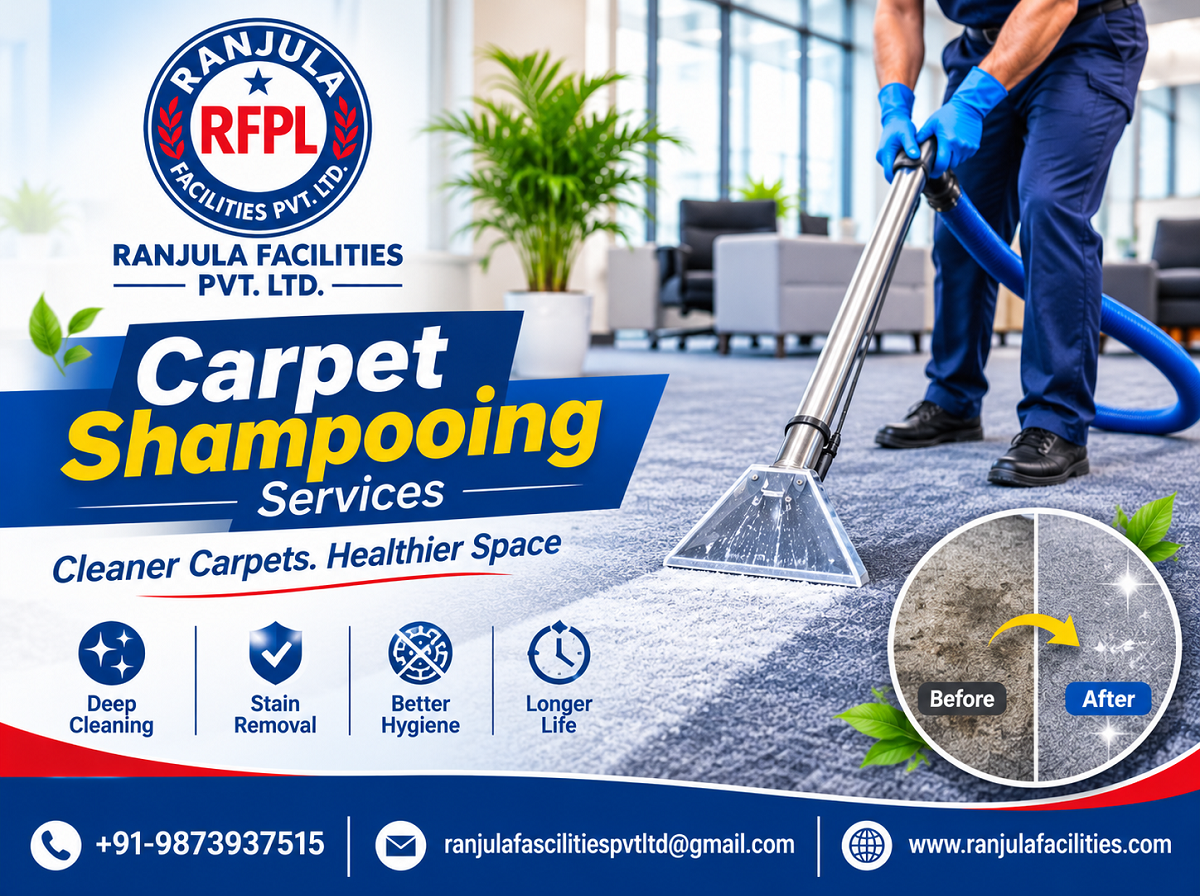
Carpet shampooing is a step-by-step cleaning process that removes embedded dirt, stains and residue from carpet fibres. From vacuuming and pre-treatment to shampoo application, extraction and drying, professional carpet cleaning helps maintain hygiene, improve appearance and support the long-term maintenance of carpets in offices and commercial properties.
Carpets bring comfort, warmth and a professional look to homes, offices, hotels and other commercial areas. Yet, everyday foot traffic slowly builds dust, dirt, crumbs, stains and other messes inside carpet fibres. Regular vacuuming keeps the surface of carpets clean,. Carpets often cannot lift dirt that sits beneath the fibres or stubborn stains.
Professional Carpet Shampooing Services offers a clean by treating carpet fibres with the right cleaning solutions, pulling out built‑up dirt and removing extra water from carpets. The process has key steps: inspection, vacuuming, pre‑treatment, shampooing, extraction and drying for carpets.
Knowing these steps helps owners and managers keep carpets cleaner, boost hygiene and guard flooring against early wear.
What Is Carpet Shampooing?
Carpet shampooing is a cleaning method. It is used to clean inside carpet fibres. Dirt, stains, dust, grease and old residue are removed. A cleaning solution made for carpets is applied. This solution helps loosen the dirt that is stuck in the carpet. After the solution does its job, the dirt is pulled out. This is done using cleaning tools.
These tools include shampooing machines, rotary equipment, carpet brushes, wet vacuum extractors and hot-water extraction systems. The right tool is chosen based on the carpet material. The condition of the carpet matters too. The amount of dirt also plays a part.
The goal is not just to make the carpet look clean. It is to get rid of dirt. The carpet must keep its texture. The colour should stay the same. The overall condition of the carpet must not be damaged.
Why Professional Carpet Shampooing Is Important
Carpets in offices, hotels, commercial buildings and residential properties experience foot traffic. Over time, dirt becomes trapped between the fibres, while spills, food particles and moisture can contribute to odours and stains.
Professional carpet shampooing helps with:
- Removing embedded dirt and dust
- Cleaning visible stains and spots
- Improving the appearance of carpets
- Reducing odours caused by accumulated residue
- Supporting better indoor cleanliness
- Maintaining carpets in offices and commercial facilities
- Extending the life of carpet flooring through proper maintenance
For facilities with high footfall, periodic deep cleaning is an important part of an overall housekeeping and facility maintenance programme.
Step-by-Step Carpet Shampooing Process
A professional carpet cleaning procedure follows a systematic approach to achieve consistent results. Each stage prepares the carpet for the next cleaning step.
1. Carpet Inspection and Cleaning Assessment
The process starts with a look at the carpet. Cleaning experts examine what the carpet is made of, its colour, how it's worn, any stains, where people walk the most and any spots that need extra care.
Different types of carpet materials can react in ways to cleaning products, water and scrubbing. That is why choosing the cleaning method before beginning is very important.
During this check, the team looks for:
- Areas that're very dirty
- Stains and marks from spills
- Sections that get a lot of foot traffic
- Fibres that are soft or delicate
- Places that smell bad
- Parts of the carpet that need extra cleaning
This check helps decide which cleaner to use, what equipment to use and how much moisture should be used in the job.
2. Thorough Vacuuming
Vacuuming is the first major cleaning step. Before applying shampoo or moisture, loose dust, dirt, hair, debris and other particles must be removed from the carpet surface.
Professional vacuuming helps prevent loose particles from mixing with the cleaning solution and spreading across the carpet during shampooing.
The cleaning team pays particular attention to:
- Carpet corners and edges
- Areas beneath furniture
- Entrance and reception zones
- Corridors and walkways
- Frequently used office areas
Thorough vacuuming prepares carpet fibres for the deeper cleaning process and helps improve the effectiveness of subsequent treatments.
3. Pre-Treatment of Stains and Heavily Soiled Areas
Some stains need care before the main shampooing starts. Coffee spills, food marks, muddy footprints, grease stains and other tough spots don’t clean well with regular carpet cleaning methods.
Pre-treatment means applying a cleaning solution to the affected areas. The solution is left to sit for a while so it can break down dirt, stains and leftover residues in the carpet fibers.
Different types of stains may call for spot-treatment solutions and techniques. Cleaning experts choose the approach based on what the stain is and what the carpet is made of.
Pre-treatment helps in ways:
- Loosen stubborn stains
- Break down built-up dirt
- Improve cleaning results in high-traffic areas
- Reduce the need for heavy scrubbing
- Prepare heavily soiled carpet sections for shampooing
The choice of cleaning chemicals and how long they are left on the carpet should depend on the carpet material and the kind of stain. It’s always good to test the solution on a part of the carpet first to make sure there is no colour fading or damage to the fibers.
4. Application of Carpet Shampoo
Once the vacuuming and spot treatment are done, the actual shampooing can start. We mix up a cleaning solution following what the maker says about dilution, then put it on the carpet with the gear.
Depending on the carpet and what it needs, the crew might go with a shampoo machine, a rotary cleaner or some other setup that fits the job.
The shampoo does its part by helping to break up dirt, grease and grime stuck in the fibres. Where it makes sense, working the carpet mechanically helps spread the solution and pull out the buildup.
You have to keep an eye on how much you put down. Much shampoo or wetness can leave stuff behind, make drying take longer and maybe even affect how the carpet holds up.
5. Mechanical Agitation and Deep Cleaning
Once the cleaning solution has been applied, the carpet may undergo mechanical agitation using suitable brushes or cleaning equipment.
This step helps the cleaning solution reach the carpet fibres more effectively and loosen dirt that ordinary vacuuming cannot remove.
Professional cleaners adjust the agitation method according to:
- Carpet pile height
- Fibre type
- Carpet construction
- Level of soiling
- Cleaning equipment being used
Gentle and controlled agitation is important, particularly for delicate or looped carpets, as aggressive brushing may damage the fibres.
6. Dirt and Shampoo Extraction
After the cleaning solution has loosened the accumulated dirt, the next step is to remove the soil and excess cleaning moisture.
Professional carpet cleaning equipment may use wet vacuum extraction or hot-water extraction, depending on the selected cleaning method and carpet requirements.
The extraction stage helps remove:
- Loosened dirt and debris
- Cleaning solution residue
- Excess water
- Stain-treatment residues
Proper extraction is particularly important because excessive moisture and cleaning residue can affect carpet appearance, create unpleasant smells or contribute to faster re-soiling.
For commercial carpets, effective extraction also helps reduce the time required before the area can return to normal use.
7. Final Inspection and Spot Cleaning
After the main cleaning process, the carpet is inspected to check whether stains, discolouration or heavily soiled areas require additional treatment.
The team may perform targeted spot cleaning on selected sections rather than repeating the entire shampooing process.
The final inspection helps ensure that:
- Visible stains have been addressed
- Cleaning residue has been properly removed
- Carpet fibres appear reasonably uniform
- No excessive moisture remains in problem areas
- The cleaned surface meets the expected standard
If required, additional cleaning may be performed on areas that need further attention.
8. Carpet Drying and Ventilation
Drying is the final and equally important stage of professional carpet shampooing. Once cleaning and extraction are complete, the carpet must be allowed to dry properly before normal use.
Drying time depends on several factors, including carpet thickness, fibre type, room temperature, humidity, ventilation, moisture used during cleaning and the efficiency of extraction.
To support faster drying, cleaning professionals may:
- Use air movers or fans
- Improve room ventilation
- Maintain suitable airflow
- Keep unnecessary foot traffic away from wet carpet
- Use equipment to remove excess moisture
The carpet should be allowed to dry adequately before furniture is returned or the area is reopened for regular use.
Carpet Shampooing Process at a Glance
|
Cleaning Stage |
Purpose |
|
Inspection |
Identify carpet type, stains and cleaning requirements |
|
Vacuuming |
Remove loose dirt, dust and debris |
|
Pre-treatment |
Loosen stubborn stains and heavily soiled areas |
|
Shampoo application |
Apply suitable carpet cleaning solution |
|
Agitation |
Release dirt trapped within carpet fibres |
|
Extraction |
Remove loosened dirt and excess cleaning moisture |
|
Final inspection |
Check cleanliness and address remaining spots |
|
Drying |
Allow carpet to dry with suitable airflow |
How Often Should Carpets Be Shampooed?
Carpet shampooing frequency depends on the property, foot traffic, carpet material and maintenance routine.
Office and Corporate Carpets
Office carpets in reception areas, meeting rooms, corridors and workstations may require periodic deep cleaning because employees and visitors bring dust and dirt into the premises throughout the day.
High-traffic sections may require more frequent maintenance than less-used areas.
Hotels and Hospitality Properties
Hotel carpets experience regular guest movement, luggage traffic and occasional spills. Cleaning schedules should consider guest occupancy, room turnover and the condition of carpeted areas.
Residential Properties
Homes with children, pets, frequent visitors or carpeted living areas may require more regular deep cleaning. The cleaning frequency should be adjusted according to visible dirt accumulation and carpet usage.
Commercial and Institutional Buildings
Shopping centres, educational institutions, healthcare facilities and other large buildings may require planned carpet maintenance schedules based on occupancy, operational requirements and hygiene expectations.
Carpet Shampooing vs Regular Vacuuming
Regular vacuuming and professional carpet shampooing serve different purposes. Both are important for maintaining carpet cleanliness.
|
Feature |
Regular Vacuuming |
Professional Shampooing |
|
Cleaning depth |
Mainly surface and loose dirt |
Deeper cleaning of accumulated soil |
|
Cleaning method |
Dry suction |
Cleaning solution and suitable equipment |
|
Stain treatment |
Limited |
Targeted pre-treatment available |
|
Moisture usage |
Generally none |
Uses controlled moisture |
|
Maintenance frequency |
Frequent or routine |
Periodic deep cleaning |
|
Purpose |
Daily carpet maintenance |
Deep cleaning and restoration of appearance |
Regular vacuuming should continue between professional cleaning sessions to reduce the accumulation of dirt and maintain the carpet's appearance.
Common Mistakes to Avoid During Carpet Shampooing
Incorrect carpet cleaning techniques may leave residue, damage fibres or increase drying time.
Using Too Much Shampoo
Excessive cleaning solution can leave sticky residue that attracts dirt. Using the recommended dilution is important for effective cleaning.
Applying Excessive Water
Too much moisture can increase drying time and may create unwanted odours if the carpet remains damp for an extended period.
Skipping Vacuuming
Applying shampoo directly over loose dirt can make cleaning less effective and may cause soil to spread across the carpet.
Ignoring Carpet Material
Different carpet fibres require different cleaning approaches. Using an unsuitable chemical or overly aggressive agitation may cause damage or colour changes.
Allowing Foot Traffic Before Drying
Walking on a damp carpet may transfer dirt back onto the surface and affect the cleaning result. Restricting access during drying helps maintain cleanliness.
Professional Carpet Shampooing Services by Ranjula Facilities
Maintaining clean carpets is an important part of creating hygienic, comfortable and presentable environments in offices, commercial buildings and residential properties.
Ranjula Facilities Pvt. Ltd. provides professional facility management and mechanized deep cleaning services, including carpet shampooing, carpet and upholstery cleaning, steam extraction and moisture removal using professional cleaning equipment.
The company's deep cleaning services support corporate offices, commercial facilities, residential premises and other establishments requiring specialized cleaning beyond routine housekeeping.
With suitable cleaning methods, professional equipment and trained cleaning teams, Ranjula Facilities helps clients maintain carpeted areas through planned deep cleaning and facility hygiene management.
For businesses and property managers looking for carpet shampooing services, professional cleaning can be arranged according to carpet condition, area size, operational schedule and cleaning requirements.
Conclusion
Carpet shampooing is an organised cleaning process. Carpet shampooing involves inspecting the carpet, vacuuming, pre‑treating stains, applying shampoo, agitating the mixture, extracting the suds, inspecting the carpet again and drying it. Every step of carpet shampooing helps to lift dirt, remove stains and keep carpet fibres looking good.
In offices, hotels, homes and commercial buildings, regular vacuuming with periodic professional carpet shampooing can improve carpet upkeep and create cleaner indoor spaces.
Choosing a cleaning team and an appropriate cleaning method ensures carpets receive thorough treatment without excess moisture, chemical residue or damage to carpet fibres.